Research Groups
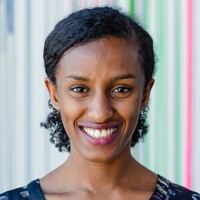

AI Safety and Alignment
Maksym Andriushchenko
The new AI Safety and Alignment Group focuses on developing technical solutions to reduce risks from general-purpose AI models.
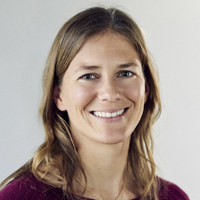
Algorithms and Society
Celestine Mendler-Dünner
Building theoretical and practical tools to support responsible and reliable machine learning in social context.
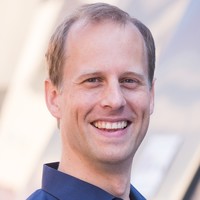
Computational Applied Mathematics & AI Lab
T. Konstantin Rusch
The Computational Applied Mathematics & AI Lab (CAMAIL) is a research group at the ELLIS Institute Tübingen and the Max Planck Institute for Intelligent Systems headed by T. Konstantin Rusch.

Cooperative Machine Intelligence for People-Aligned Safe Systems
Sahar Abdelnabi
Developing safe, aligned, and steerable AI agents with emphasis on security, human aspects, and cooperative multi-agent systems.
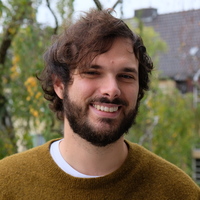
Deep Models and Optimization
Antonio Orvieto
Investigating the interplay between optimizer and architecture in Deep Learning, and new networks for long-range reasoning.
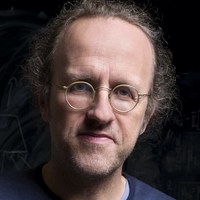
Empirical Inference
Bernhard Schölkopf
The problems studied in the department can be subsumed under the heading of empirical inference. This term refers to inference performed on the basis of empirical data.


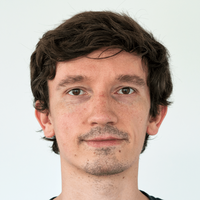
Robust Machine Learning
Wieland Brendel
We use theoretical and empirical approaches to build machine vision systems that see and understand the world like humans.
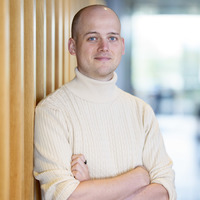
Safety- and Efficiency- aligned Learning
Jonas Geiping
Investigating the feasibility of technical solutions to safety, security in machine learning.

Science and Probabilistic Intelligence
Maximilian Dax
The group for Science and Probabilistic Intelligence (SPIN) combines foundational research on probabilistic AI with applied research in science.